Digital Freestyle // transformation

Transformation that does not wait for a brief

In almost every company people know which processes take too long. What is missing is someone who names the bottleneck, builds the fix and stays with it until it is genuinely used. That is what I do, usually before anyone asks.

Digital Freestyle

Four steps, always the same

Digital Freestyle is my name for a way of working, not for a product: start without a requirements document, build inside live operations, correct against reality. Freestyle does not mean unplanned. It means the sequence is fixed but the outcome is not, and that building happens while others are still aligning.

  • Observe. Walk through the real process, not the org chart. Where is data retyped, where is time spent searching, where does the same record exist twice?
  • Name it. Put the bottleneck into numbers: hours, error rate, lead time. So the decision stops being a matter of taste.
  • Build. A working prototype instead of a concept paper. Better something usable in two weeks than a presentation in six months.
  • Operate. Put it live, measure, refine. A system nobody uses is not a project, it is expenditure.
Projects

Self-initiated, self-built, in use

cetrac // warehouse and stocktaking

Stocktaking app: every phone becomes a scanner

When I saw colleagues heading out with pen and paper to count many thousands of individual parts, a chill ran down my spine. So I sat down and built the app.

Built in-house: the app turns any existing company phone into a barcode scanner, without buying a single handheld device. Employee identification, location and time tracking run alongside, the counting record is signed directly on the phone, and the figures flow into the ERP system. The result: stock levels are live every evening and pushed to the website every morning. A once-a-year paper count became continuous inventory management. Concept, development and rollout done entirely in-house: 15,162 articles in the master data, 15,161 barcodes on file, two warehouse sites.

  • The entire warehouse mapped into zones, so every product has an exact location rather than a rough corner; the zone signs carry QR codes the app reads
  • Barcode scanning through the phone camera, no additional hardware
  • Employee identification, location and time tracking per counting run
  • Counting record signed digitally, directly on the device
  • Connected to the ERP system instead of retyping from paper count sheets
  • Live stock every evening, handed to the website automatically each morning
15.162articles in the master data
15.161barcodes on file
2warehouse sites
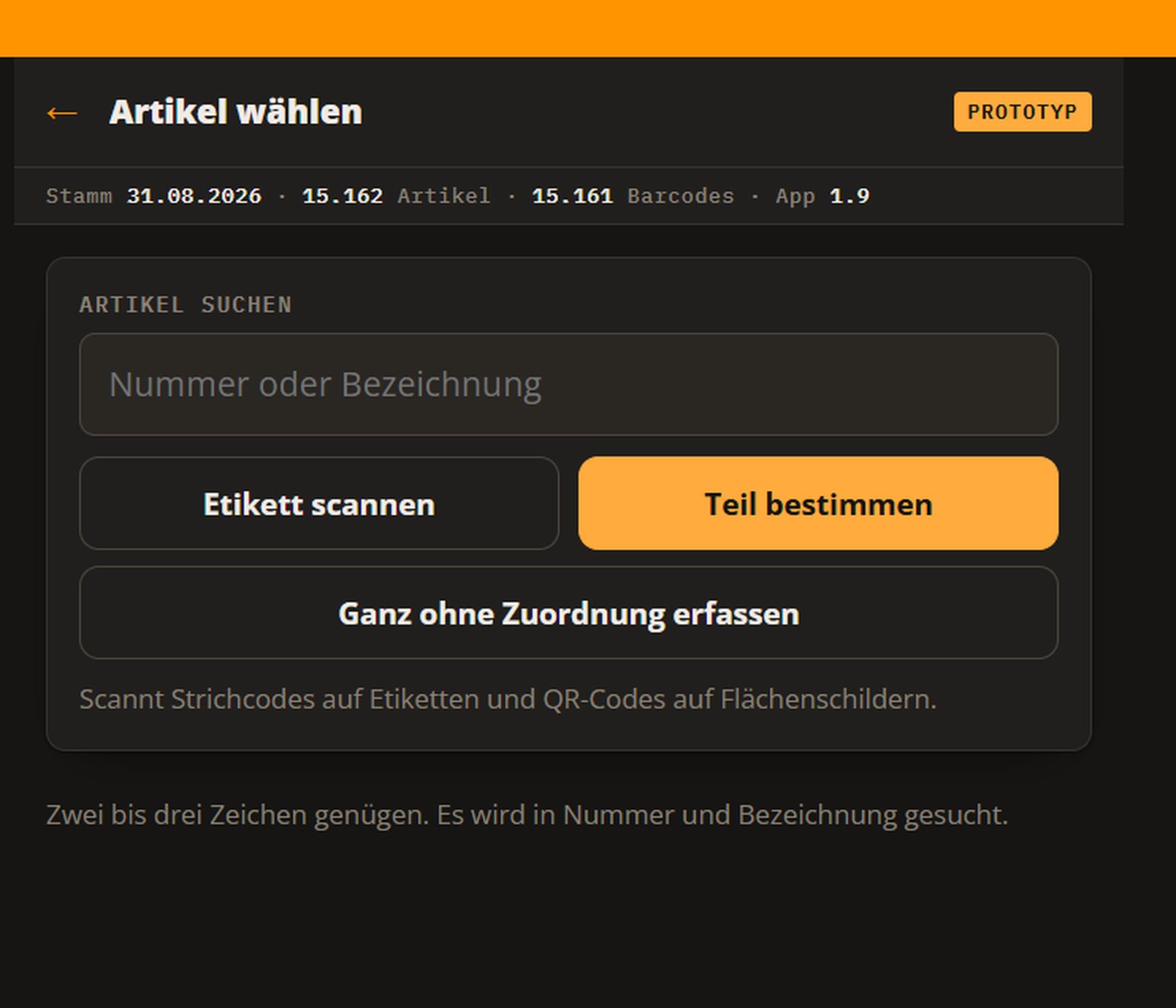
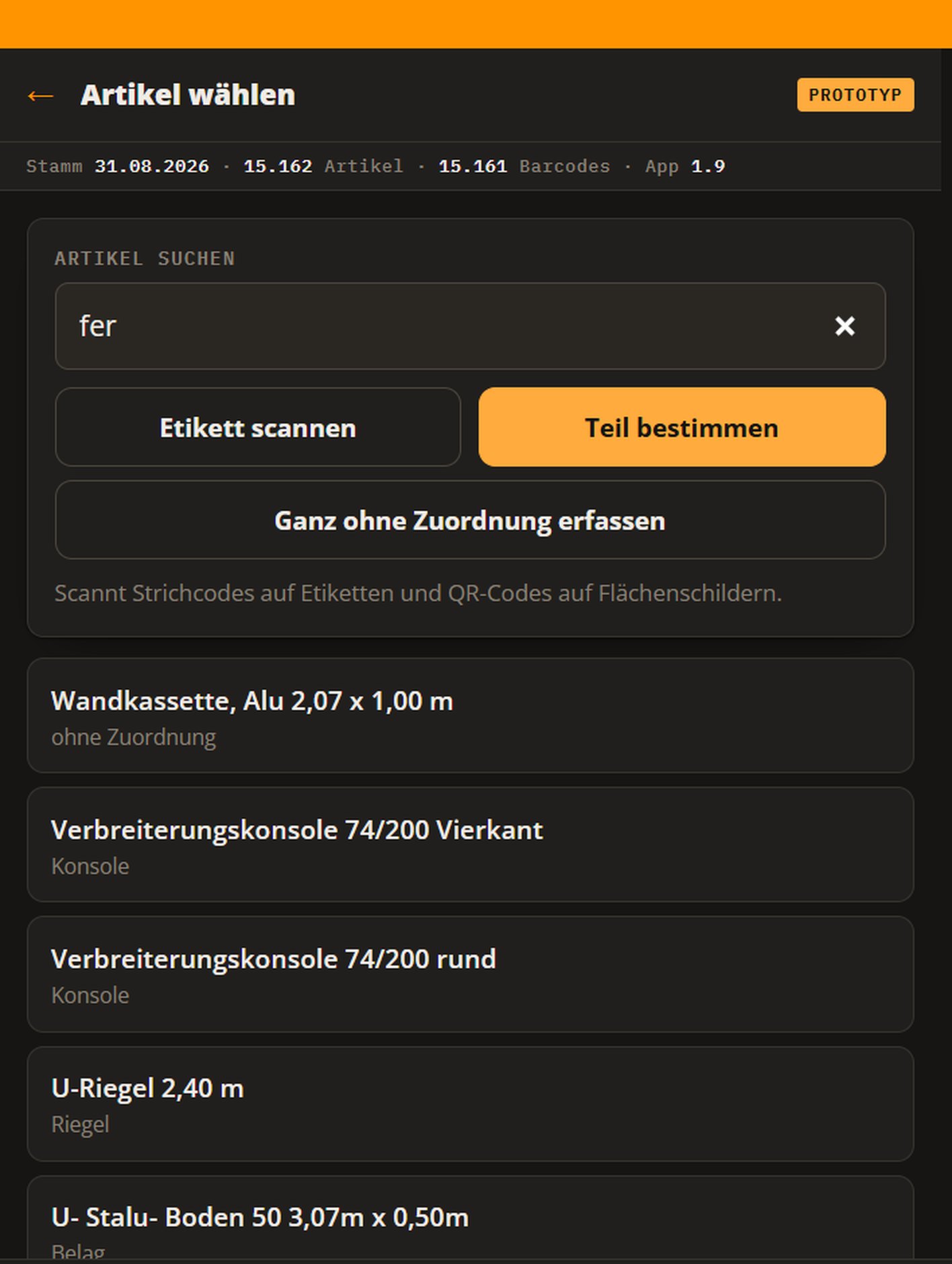
CETRAC stocktaking app: selecting an article, scanning a label, identifying a part
Starting a count: scan a label or identify the part via search
CETRAC stocktaking app: article search with results from the master data
Two or three characters are enough, matching number and description
cetrac // TYPO3 12

Relaunch of cetrac.com

A new information architecture, a re-cut category and product structure, Solr-backed search in the store. Redesign together with Philipp Schade and Stephan Gonder, with concept, coordination and quality assurance on my side.

cetrac // 7 languages

Seven language versions single-handedly

German, English, French, Italian and Spanish fully live editorially, with AI support directly in the TYPO3 backend. Not literal translation but market adaptation, with dedicated keyword research per target market and consistent hreflang.

cetrac // own product line

EasyFlow, calculators as a lead engine

Five free calculators plus a scaffolding manager, seven languages including Hebrew with right-to-left layout, on a dedicated Hetzner server running Docker and Caddy. Self-initiated, self-built, self-operated. Press coverage in the bauhandwerk newsletter published by Bauverlag, confirmed for August 2026.

cetrac // 2026 catalogue

A catalogue pipeline instead of manual layout

A custom generator pipeline in Python and WeasyPrint: 68 parts, 324 vector graphics, a print-ready CMYK PDF built from one data source. When an article changes the catalogue changes, with nobody resetting a page by hand.

Daily operations

What runs by itself every day

Transformation does not end when the project does. These routines run continuously and keep operations current without anyone having to remember them.

AI agents as a tool, not a toy

Recurring work is handled by orchestrated AI agents: research, copy in five languages, data preparation, checking their own output. The human decides, the agent does the groundwork. That is what makes a one-person digital department possible in the first place.

Lead capture that stops losing enquiries

Product enquiries from the live system are demonstrably back in the inbox, with one binding source instead of scattered entry points. The historical backlog was processed and analysed, so for the first time it is visible which products actually generate enquiries.

Reporting that stays current on its own

A radar for leads and visibility brings rankings, traffic, campaigns and enquiries together in one place. The figures update automatically instead of being collected by hand each month. Anyone who looks in sees today's state, not last quarter's.

Morning briefing: the day starts with numbers

A scheduled run pulls the key figures from analytics, Search Console and the campaigns every working morning, records them and reports what stands out. No opening four dashboards by hand, and no week in which a drop goes unnoticed.

Weekly overview instead of a status meeting

The status of every running project updates itself in the evening and is available at any time. What is done, what is stuck and why becomes a matter of looking rather than asking.

Focus areas

Where I start inside a company

Processes

Process automation

Getting rid of recurring manual work: data transfers, lists, approvals, reports. First measure where the time goes, then automate what is worth it. The yardstick is hours saved, not the number of tools.

Data

ERP and interfaces

Stock, article master data and enquiries in one place instead of four spreadsheets nobody reconciles any more. Existing systems get connected and rebuilt rather than reflexively replaced: a system change usually costs more than the clean interface that was missing.

AI

AI in business, without the buzzword bingo

AI agents for research, copy in several languages, data preparation and checking their own output. Concrete tasks rather than a strategy paper, measurable relief, and a clear line: people decide, the agent does the groundwork.

Warehouse

Stocktaking and inventory management

Counting on a phone instead of on paper, warehouse zoning with real locations instead of approximate corners, live stock instead of one count a year. Without new hardware, because the company phones that already exist are enough.

Consulting

Analysis that does not stop at the recommendation

A recommendation is only worth something once somebody can act on it. So for me the analysis includes building the route there and training the people who will work with it afterwards.

Visibility

A digital presence that produces enquiries

Website, store and visibility are part of transformation. What runs cleanly internally has to be findable externally, otherwise you are optimising processes for enquiries that never arrive. SEO, SEA, AEO and GEO as one job.

Go to Visibility 3.0
FAQ // transformation

Frequently asked questions about digital transformation

What is Digital Freestyle?

Digital Freestyle is my name for how I approach digital transformation: starting without a requirements document and without a purchase order, building inside live operations and correcting against reality instead of spending months in alignment meetings. The sequence is always the same: observe, put the bottleneck into numbers, build a working prototype, put it into operation and refine it. Freestyle refers to starting without a template, not to the method: cetrac's stocktaking app came about this way, as did the EasyFlow calculator product line and the catalogue pipeline.

What does digital transformation actually mean in your work?

That a process afterwards is faster, more traceable and less error-prone than before, and that the data ends up where it is needed. Not buying software, but changing the process. One example: at cetrac GmbH an annual paper stocktake became continuous inventory management, because counting happens on the phone and the figures go straight into the ERP system.

Do you only work on request, or do you bring your own proposals?

Both, but the emphasis is on my own proposals. Most of the projects I can show were never commissioned: the stocktaking app, the EasyFlow calculator product line and the catalogue pipeline all came about because I noticed where time was being lost in daily operations.

How long until there is a first result?

I work towards a running prototype, not a concept paper. Depending on scope, the distance between the first conversation and something usable is usually a matter of weeks, not quarters. Only once the prototype survives daily use does it get expanded.

Do I need new hardware or a new system for this?

Usually not. The stocktaking app runs on the company phones that are already there, not a single handheld device had to be bought. Existing systems are connected rather than replaced, as long as they still serve their purpose.

What happens to our existing ERP system?

It stays if it is viable, and it gets clean interfaces. Where the data model or the processes are in the way, it gets rebuilt rather than replaced. What matters is that stock, articles and enquiries are no longer maintained twice in different places.

Do you use AI, and what for exactly?

Yes, as tooling for recurring work: research, copy in several languages, data preparation and checking its own output. Decisions are made by people. AI does not replace expertise here, it does the groundwork nobody would otherwise get to.

Which languages do you work in?

Trilingually in Spanish, German and English. For international projects that means market adaptation instead of literal translation, with dedicated keyword research per target market. For cetrac.com I set up seven language versions single-handedly.

Facing a similar task? Tell me about it. I am open to projects where exactly this is needed.

Write to me